Vegetable Snacking
The Challenge
The Challenge
The Challenge
In 2015, Indra Nooyi mandated that the organization define the future of healthy snacking by 2020. With a $30B global market and $10B in the U.S., PepsiCo needed to move beyond chips and multigrain products and build a credible, scalable portfolio to remain relevant.
Category definition was largely multigrain, baked, or portion-controlled, which meant a big opportunity for growth
Vegetable snacks were niche and low-velocity, with poor taste perceptions limiting adoption
No credible 3–5 year BFY veggie roadmap across short-, mid-, and long-term horizons
Overreliance on multigrain and chip-based formats constrained perceived health and growth
Lack of business-actionable concepts vetted against technical and manufacturing feasibility
No clear BFY technology roadmap to guide capability investment and scale
Category definition was largely multigrain, baked, or portion-controlled, which meant a big opportunity for growth
Vegetable snacks were niche and low-velocity, with poor taste perceptions limiting adoption
No credible 3–5 year BFY veggie roadmap across short-, mid-, and long-term horizons
Overreliance on multigrain and chip-based formats constrained perceived health and growth
Lack of business-actionable concepts vetted against technical and manufacturing feasibility
No clear BFY technology roadmap to guide capability investment and scale
Category definition was largely multigrain, baked, or portion-controlled, which meant a big opportunity for growth
Vegetable snacks were niche and low-velocity, with poor taste perceptions limiting adoption
No credible 3–5 year BFY veggie roadmap across short-, mid-, and long-term horizons
Overreliance on multigrain and chip-based formats constrained perceived health and growth
Lack of business-actionable concepts vetted against technical and manufacturing feasibility
No clear BFY technology roadmap to guide capability investment and scale
Results
$600M+ in Annual Revenue
$600M+ global portfolio


Grounded in Snacking Experience
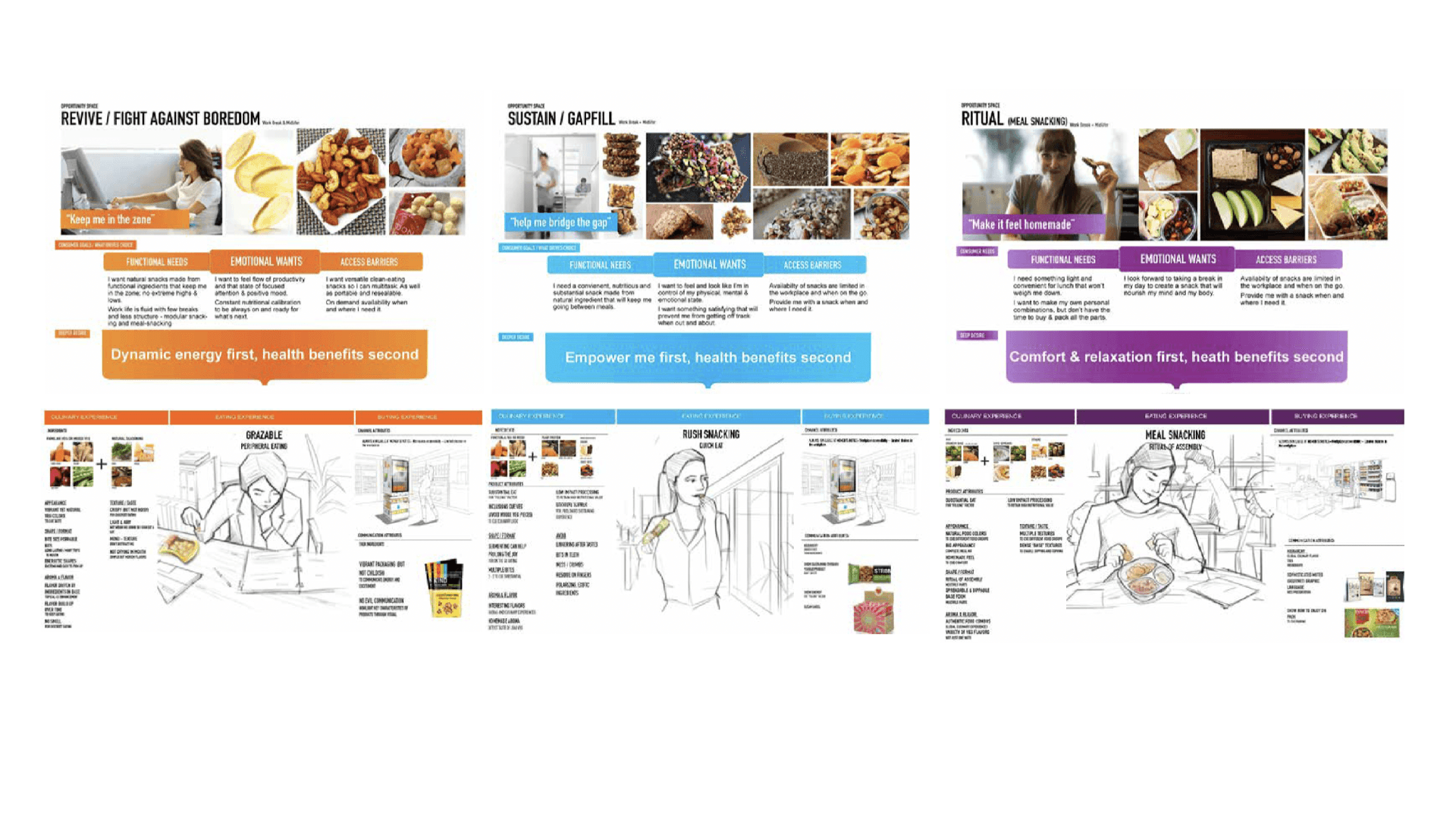
The work began by consolidating past concepts, studies, and competitive products into a set of 360 experience hypotheses that examined snacking as a complete system, from culinary context and shopping behavior to eating gestures, social settings, and use environments. These hypotheses clarified the emotional, functional, and social needs shaping behavior and defined the real job to be done, giving the team a shared lens for evaluating opportunities across the full experience.
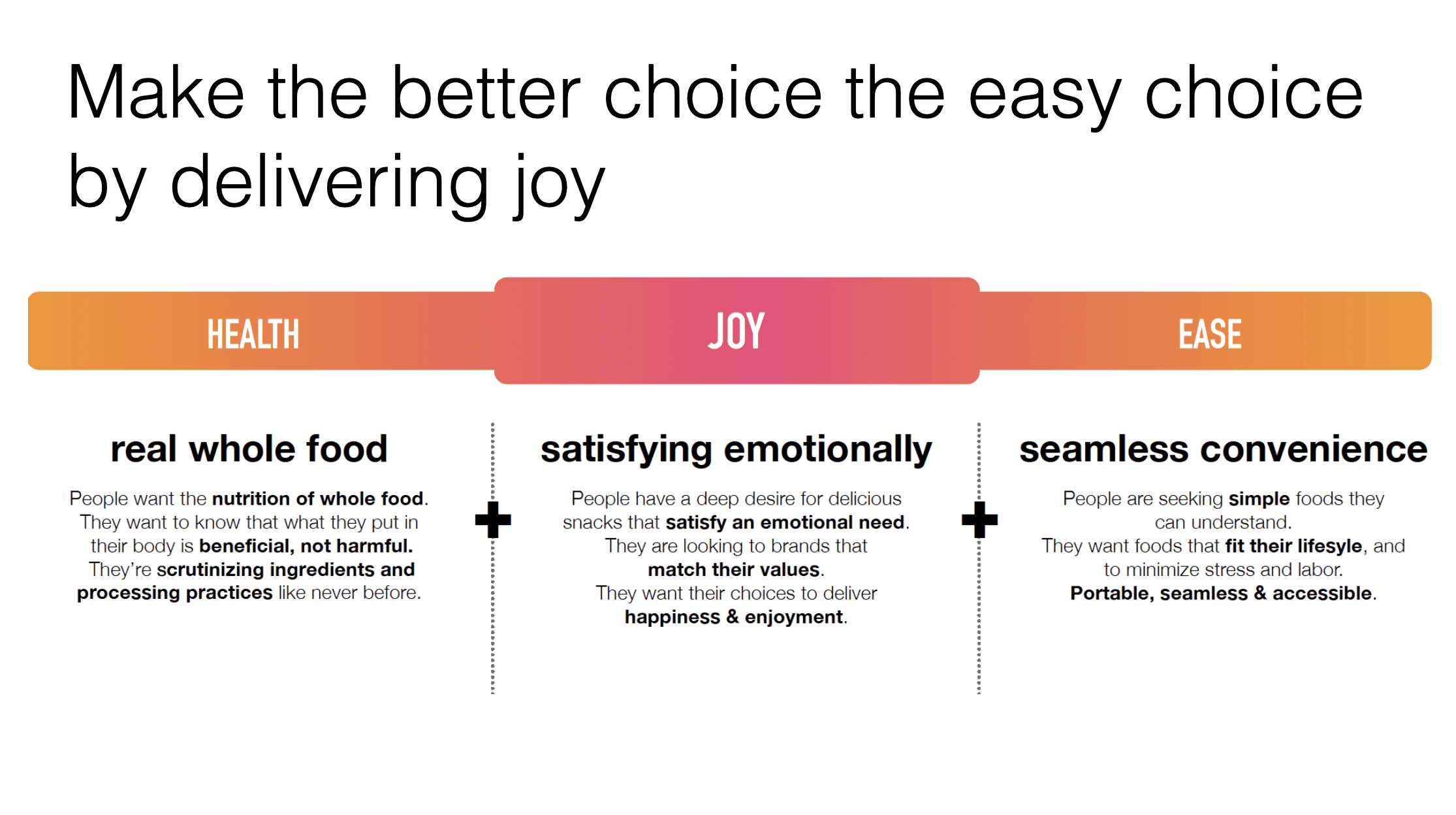
Through 12 consumer immersions combining in-home and in-store sessions, the team explored daily routines, shopping habits, and beliefs about healthy food. A consistent tension emerged. People wanted snacks that felt real and nutritious, but adoption only occurred when those choices also delivered enjoyment, required little effort, and fit naturally into existing habits. Prototypes were used throughout as learning tools, not just for tasting, surfacing insights around gesture, portioning, texture, and ease of use while connecting buying, eating, and culinary moments into a cohesive system.
The work began by consolidating past concepts, studies, and competitive products into a set of 360 experience hypotheses that examined snacking as a complete system, from culinary context and shopping behavior to eating gestures, social settings, and use environments. These hypotheses clarified the emotional, functional, and social needs shaping behavior and defined the real job to be done, giving the team a shared lens for evaluating opportunities across the full experience.
Through 12 consumer immersions combining in-home and in-store sessions, the team explored daily routines, shopping habits, and beliefs about healthy food. A consistent tension emerged. People wanted snacks that felt real and nutritious, but adoption only occurred when those choices also delivered enjoyment, required little effort, and fit naturally into existing habits. Prototypes were used throughout as learning tools, not just for tasting, surfacing insights around gesture, portioning, texture, and ease of use while connecting buying, eating, and culinary moments into a cohesive system.
The work began by consolidating past concepts, studies, and competitive products into a set of 360 experience hypotheses that examined snacking as a complete system, from culinary context and shopping behavior to eating gestures, social settings, and use environments. These hypotheses clarified the emotional, functional, and social needs shaping behavior and defined the real job to be done, giving the team a shared lens for evaluating opportunities across the full experience.
Through 12 consumer immersions combining in-home and in-store sessions, the team explored daily routines, shopping habits, and beliefs about healthy food. A consistent tension emerged. People wanted snacks that felt real and nutritious, but adoption only occurred when those choices also delivered enjoyment, required little effort, and fit naturally into existing habits. Prototypes were used throughout as learning tools, not just for tasting, surfacing insights around gesture, portioning, texture, and ease of use while connecting buying, eating, and culinary moments into a cohesive system.


Building the Pipeline
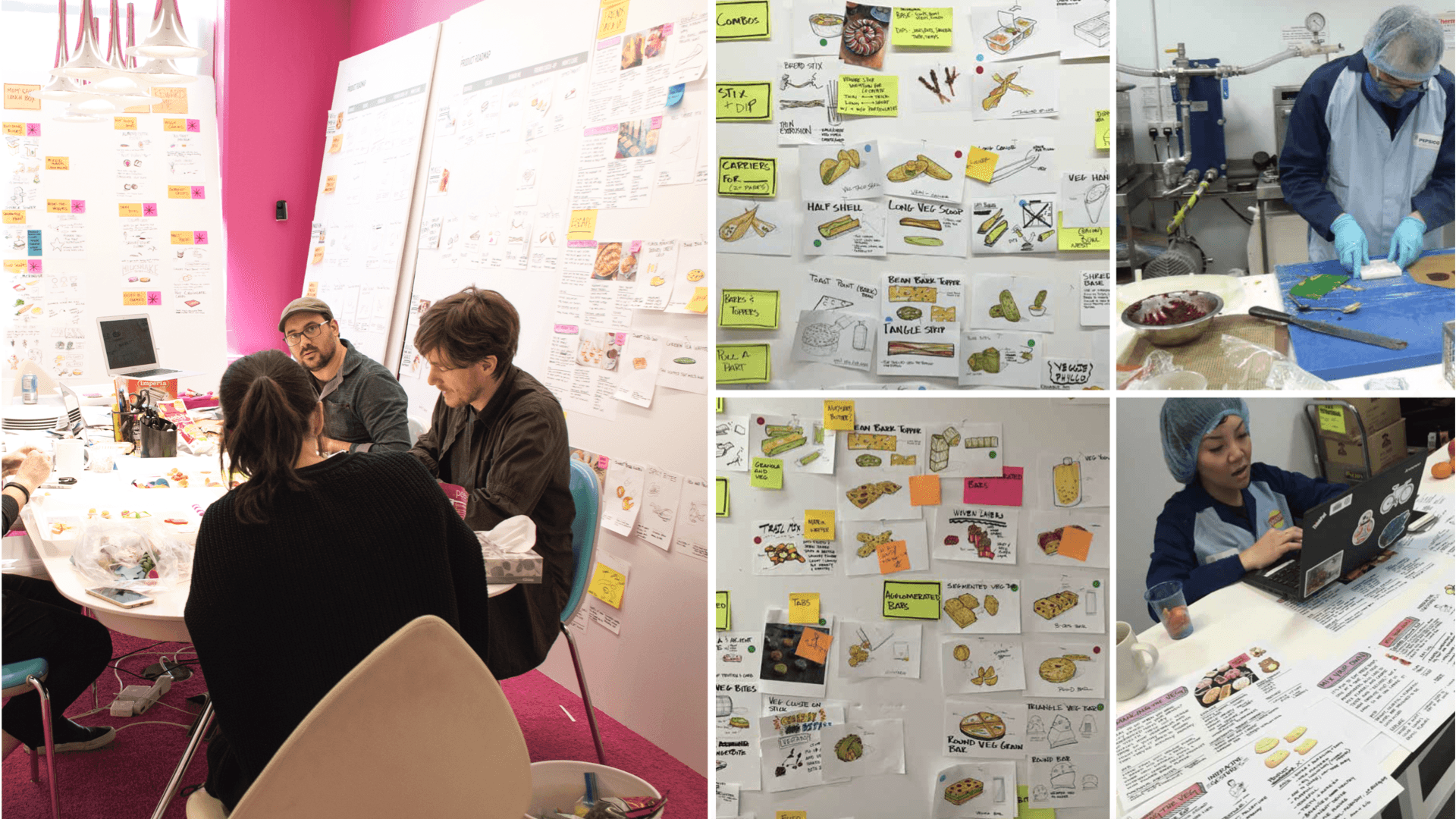
Building on consumer insight, the team moved into concept development focused on turning everyday snack experiences into scalable products. The work deliberately emphasized simple interactions and gestures such as grabbing, tearing, dipping, and sharing, along with sensory cues including crunch, warmth, aroma, and seasoning. Concepts were grounded in real snacking occasions, from quick solo moments to shared social settings, ensuring relevance beyond flavor alone.
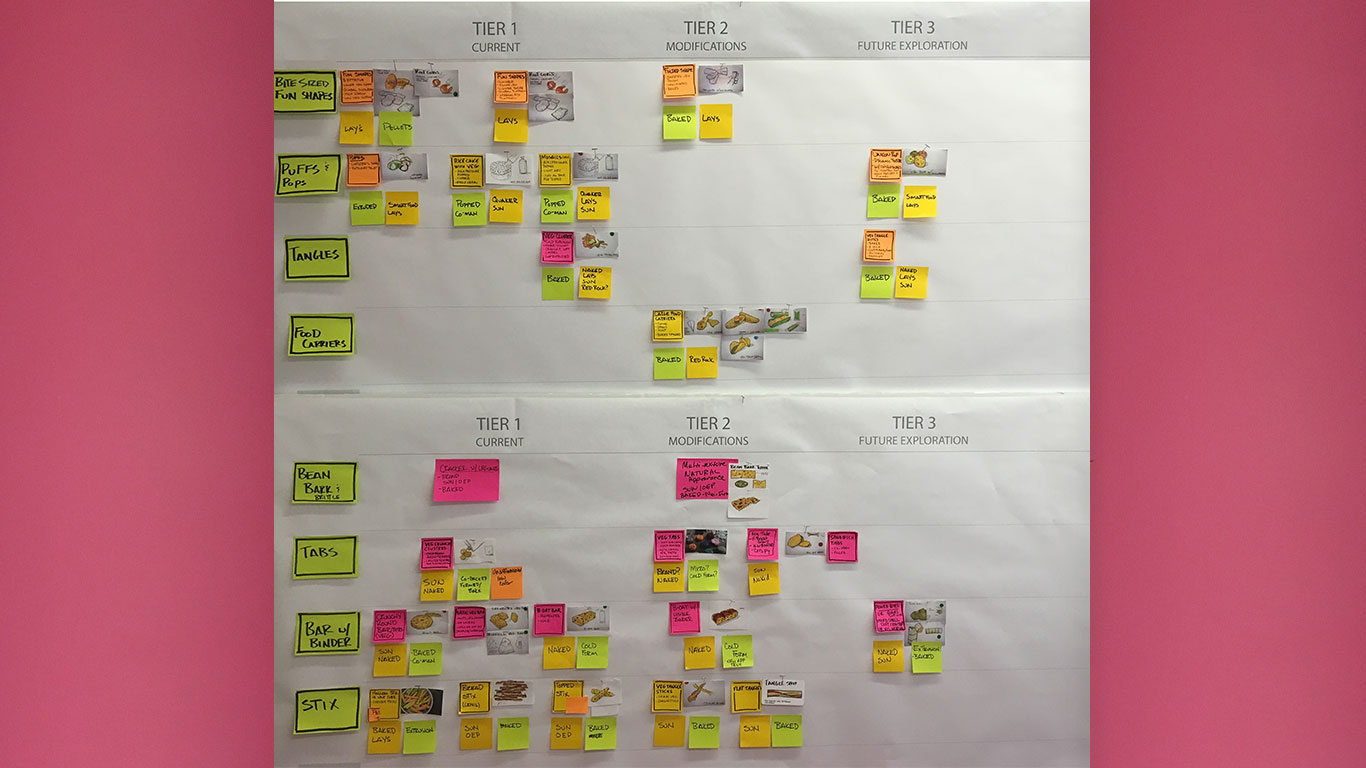
The exploration extended from ideas into capability. PepsiCo’s baking technology landscape was mapped to understand how existing and emerging platforms could deliver home-cooked taste and texture at scale. Ideas were organized into a future pipeline across near-, mid-, and long-term horizons, clarifying what could be delivered with current capabilities, what required modification, and where future investment could unlock differentiated vegetable-based snacks.
Building on consumer insight, the team moved into concept development focused on turning everyday snack experiences into scalable products. The work deliberately emphasized simple interactions and gestures such as grabbing, tearing, dipping, and sharing, along with sensory cues including crunch, warmth, aroma, and seasoning. Concepts were grounded in real snacking occasions, from quick solo moments to shared social settings, ensuring relevance beyond flavor alone.
The exploration extended from ideas into capability. PepsiCo’s baking technology landscape was mapped to understand how existing and emerging platforms could deliver home-cooked taste and texture at scale. Ideas were organized into a future pipeline across near-, mid-, and long-term horizons, clarifying what could be delivered with current capabilities, what required modification, and where future investment could unlock differentiated vegetable-based snacks.
Building on consumer insight, the team moved into concept development focused on turning everyday snack experiences into scalable products. The work deliberately emphasized simple interactions and gestures such as grabbing, tearing, dipping, and sharing, along with sensory cues including crunch, warmth, aroma, and seasoning. Concepts were grounded in real snacking occasions, from quick solo moments to shared social settings, ensuring relevance beyond flavor alone.
The exploration extended from ideas into capability. PepsiCo’s baking technology landscape was mapped to understand how existing and emerging platforms could deliver home-cooked taste and texture at scale. Ideas were organized into a future pipeline across near-, mid-, and long-term horizons, clarifying what could be delivered with current capabilities, what required modification, and where future investment could unlock differentiated vegetable-based snacks.


Opening a New Snacking Segment
Six vegetable-based SKUs for Off The Eaten Path, a business with over $600M in annual revenue, were launched globally. The effort established a new product platform for better-for-you snacking, translating consumer insight into scalable food design, sensory direction, and interaction principles that could be executed at scale.
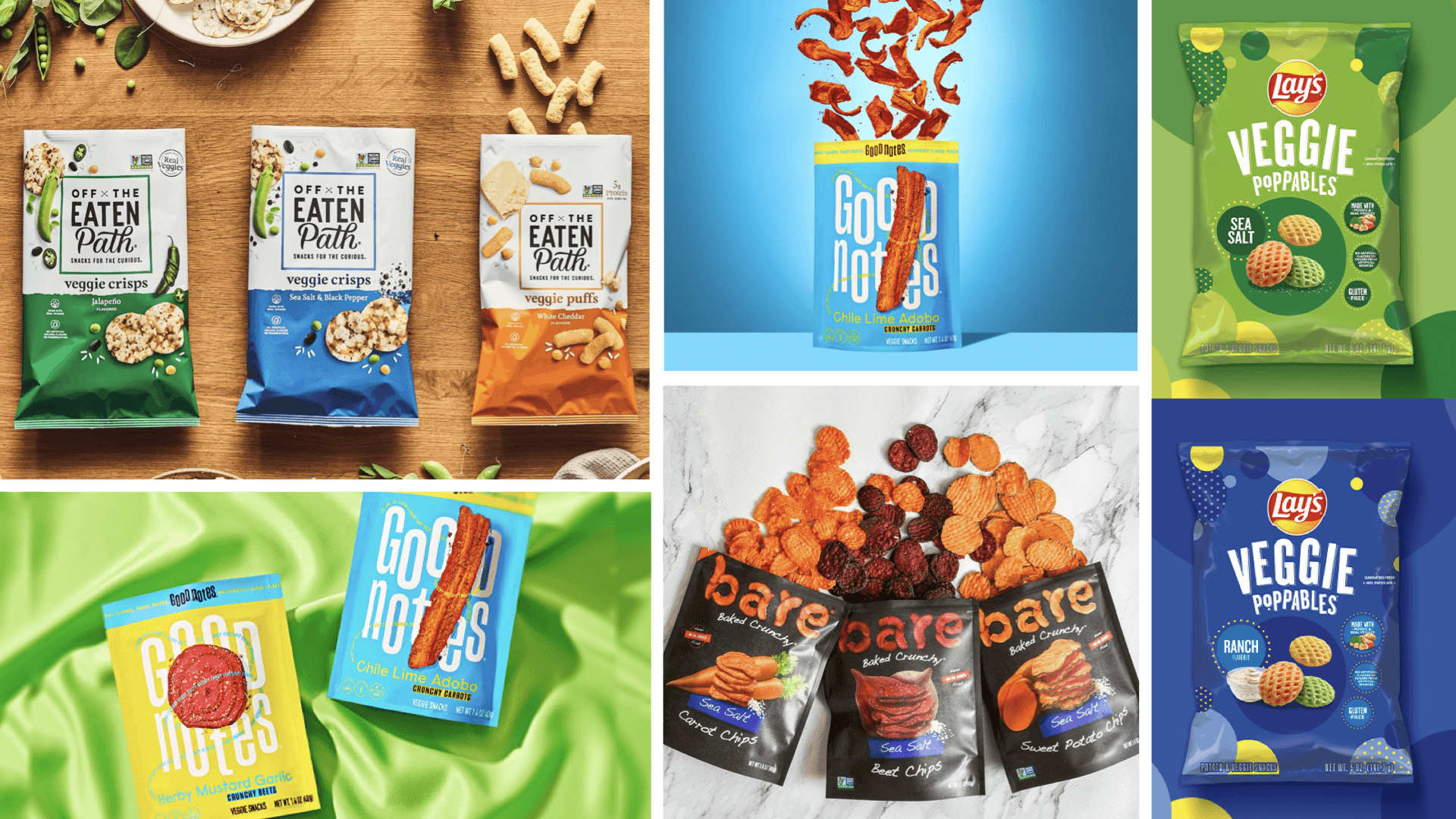
A scalable opportunity space for veggie snacking was defined, by reframing it from a health compromise into a food-first experience built around flavor, texture, and everyday relevance. The platform clarified how vegetable snacks could compete beyond claims, opening a distinct segment grounded in real ingredients and cooking-inspired preparation, and shaping additional veggie snack launches including Lay’s Veggie Poppables, Good Notes, and Bare.
Six vegetable-based SKUs for Off The Eaten Path, a business with over $600M in annual revenue, were launched globally. The effort established a new product platform for better-for-you snacking, translating consumer insight into scalable food design, sensory direction, and interaction principles that could be executed at scale.
A scalable opportunity space for veggie snacking was defined, by reframing it from a health compromise into a food-first experience built around flavor, texture, and everyday relevance. The platform clarified how vegetable snacks could compete beyond claims, opening a distinct segment grounded in real ingredients and cooking-inspired preparation, and shaping additional veggie snack launches including Lay’s Veggie Poppables, Good Notes, and Bare.
Six vegetable-based SKUs for Off The Eaten Path, a business with over $600M in annual revenue, were launched globally. The effort established a new product platform for better-for-you snacking, translating consumer insight into scalable food design, sensory direction, and interaction principles that could be executed at scale.
A scalable opportunity space for veggie snacking was defined, by reframing it from a health compromise into a food-first experience built around flavor, texture, and everyday relevance. The platform clarified how vegetable snacks could compete beyond claims, opening a distinct segment grounded in real ingredients and cooking-inspired preparation, and shaping additional veggie snack launches including Lay’s Veggie Poppables, Good Notes, and Bare.