IBM - Scaling Innovation Design in Sales
In 2022, IBM shifted Client Engineering to a distributed, market-embedded model across the Americas. Without an operating model, design risked becoming widely deployed with uneven impact and no clear connection to growth.
In 2022, IBM shifted Client Engineering to a distributed, market-embedded model across the Americas. Without an operating model, design risked becoming widely deployed with uneven impact and no clear connection to growth.
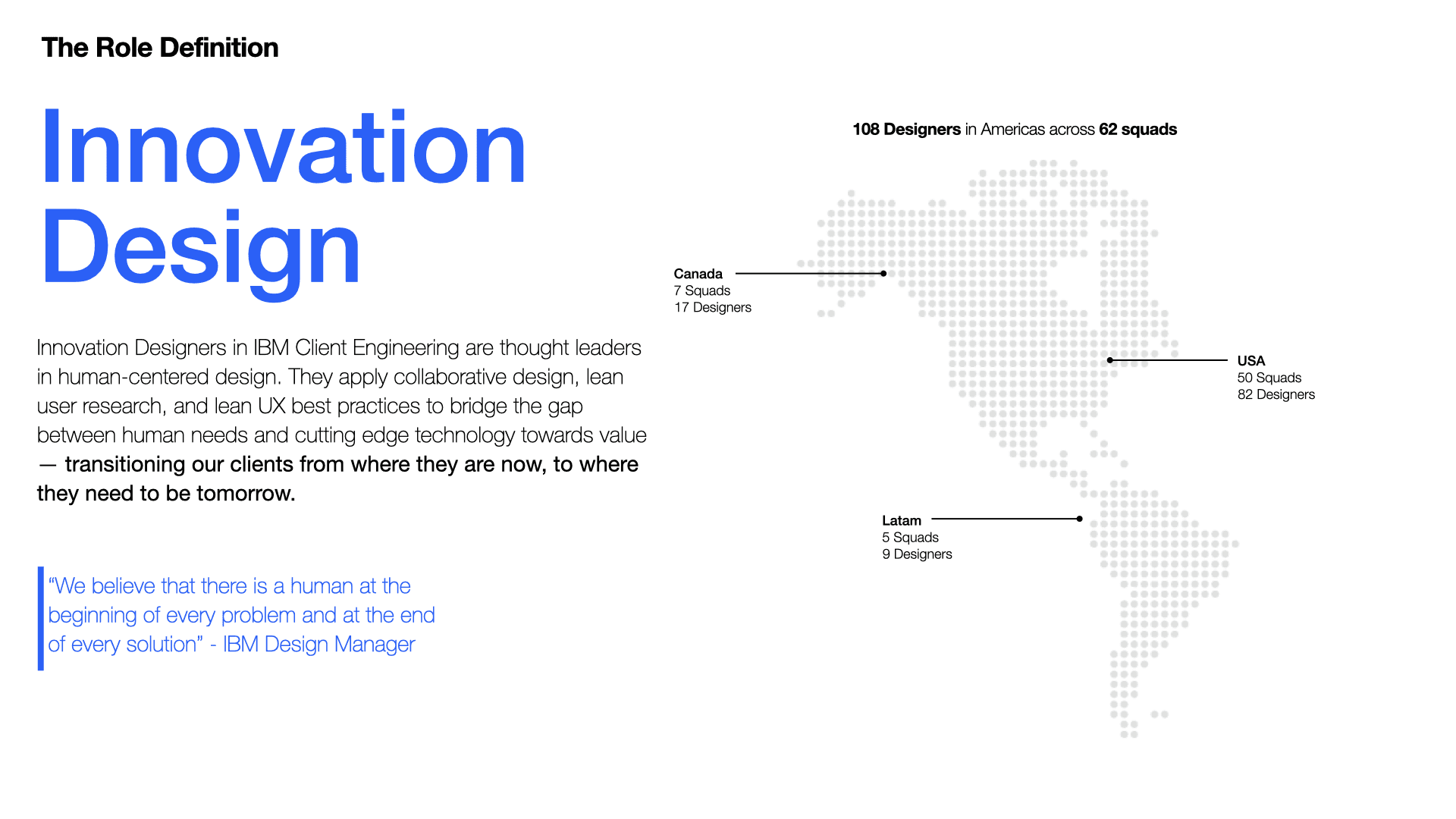
Scale: 108 designers across the U.S., Canada, and South America embedded in 62 Client Engineering squads
Context: Design was distributed across markets but inconsistently deployed and often scoped as UI or execution support
Tension: Without a shared operating model, utilization averaged ~45% against a 70% target and impact varied widely by market
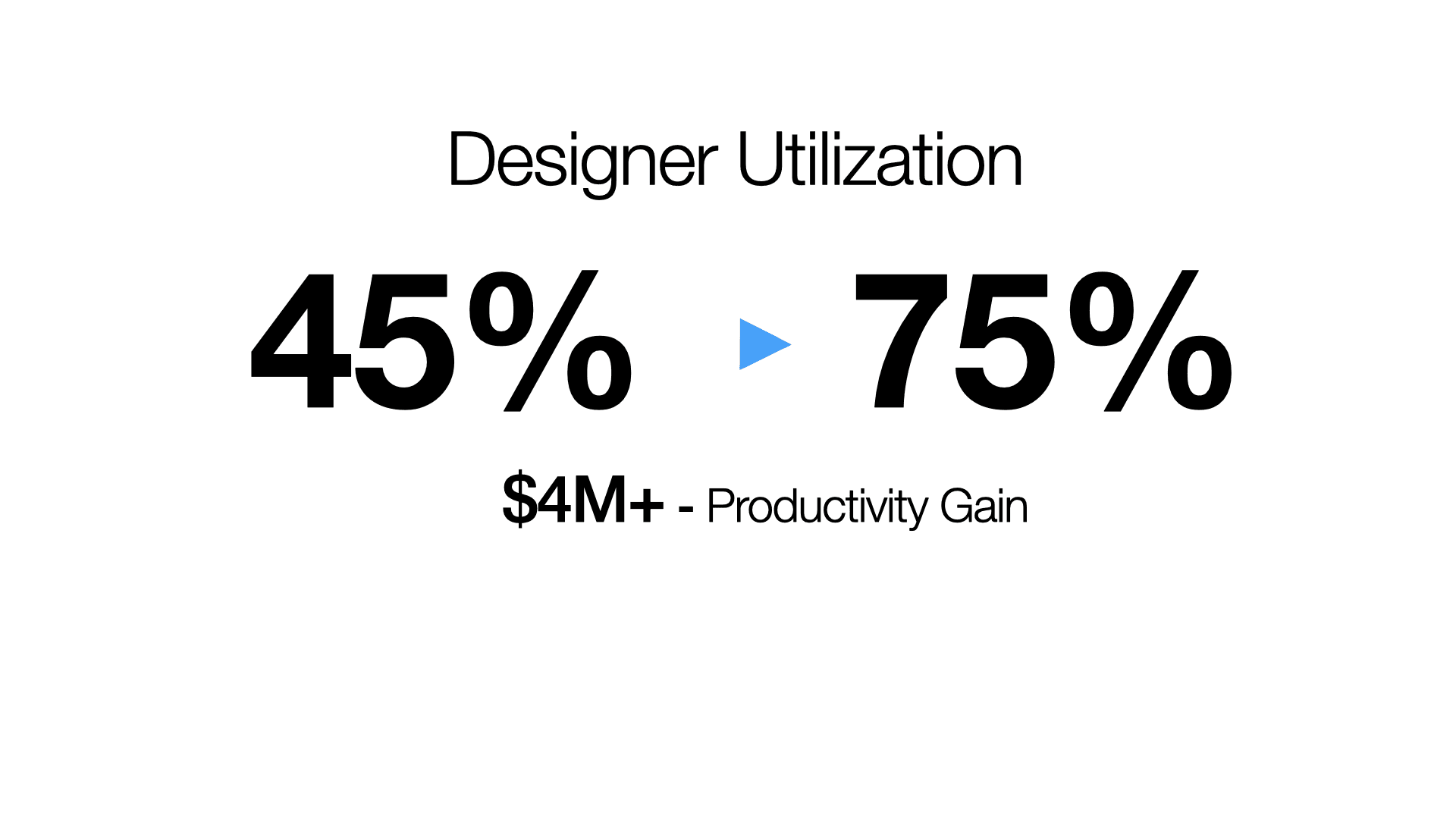
Impact: A unified Innovation Design practice increased utilization to ~75% over four quarters, recapturing ~$4M in annual productivity value and embedding design earlier in growth-critical work
Scale: 108 designers across the U.S., Canada, and South America embedded in 62 Client Engineering squads
Context: Design was distributed across markets but inconsistently deployed and often scoped as UI or execution support
Tension: Without a shared operating model, utilization averaged ~45% against a 70% target and impact varied widely by market
Impact: A unified Innovation Design practice increased utilization to ~75% over four quarters, recapturing ~$4M in annual productivity value and embedding design earlier in growth-critical work
Increased Design Utilization from 45 to 75%
$4M+ In Productivity Savings

The Challenge
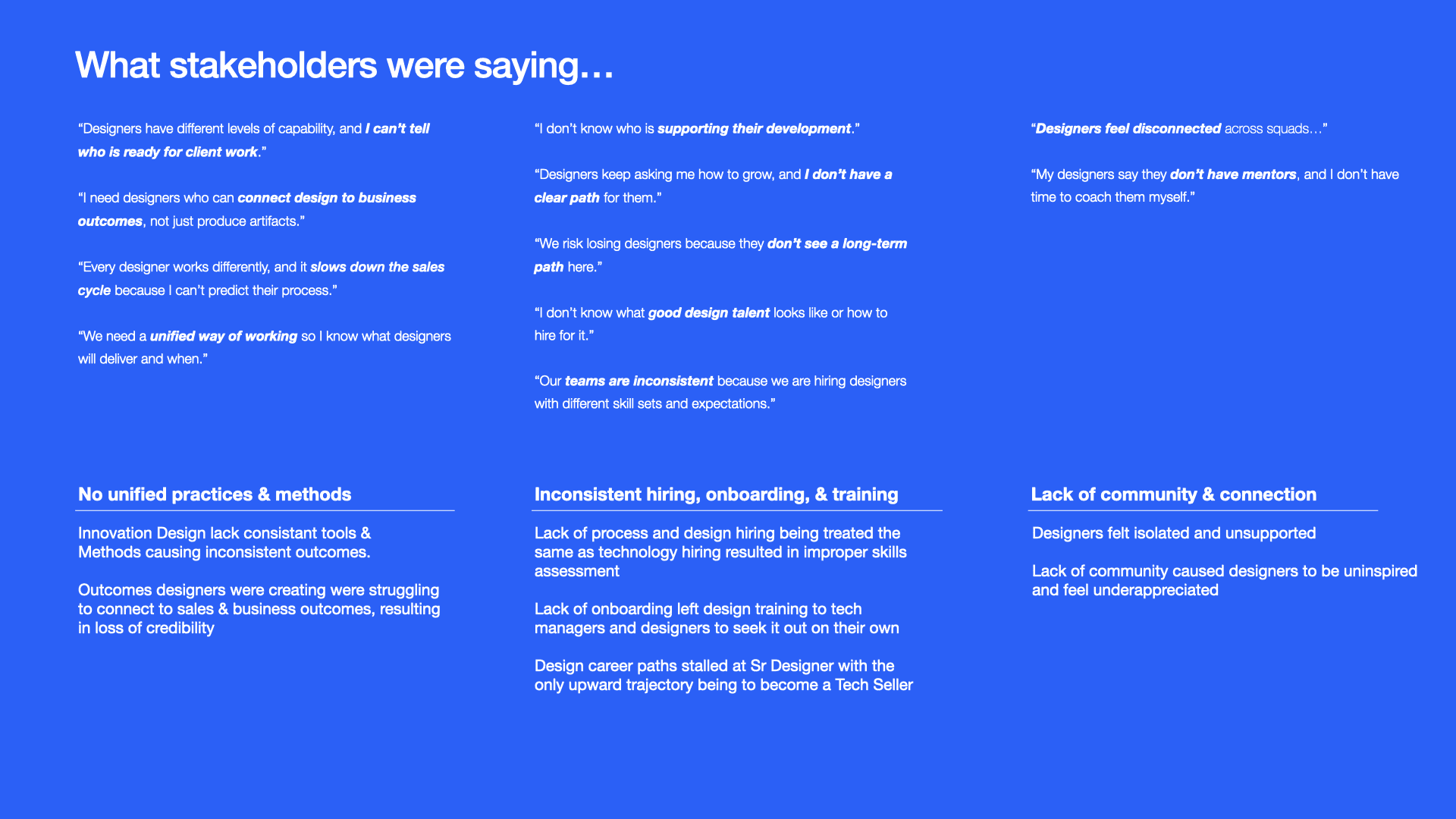
Following a reorganization, Client Engineering innovation designers were distributed across technical sales squads dominated by sales and engineering. Designers were often perceived as UI or delivery support, brought in late and disconnected from account strategy, pilot discovery, and enterprise decision-making. Utilization averaged ~45% against a 70% annual target, and design impact varied widely by market, squad, and leadership maturity. Designers risked being viewed as underperforming and lacking credible enterprise capability tied to revenue and growth.
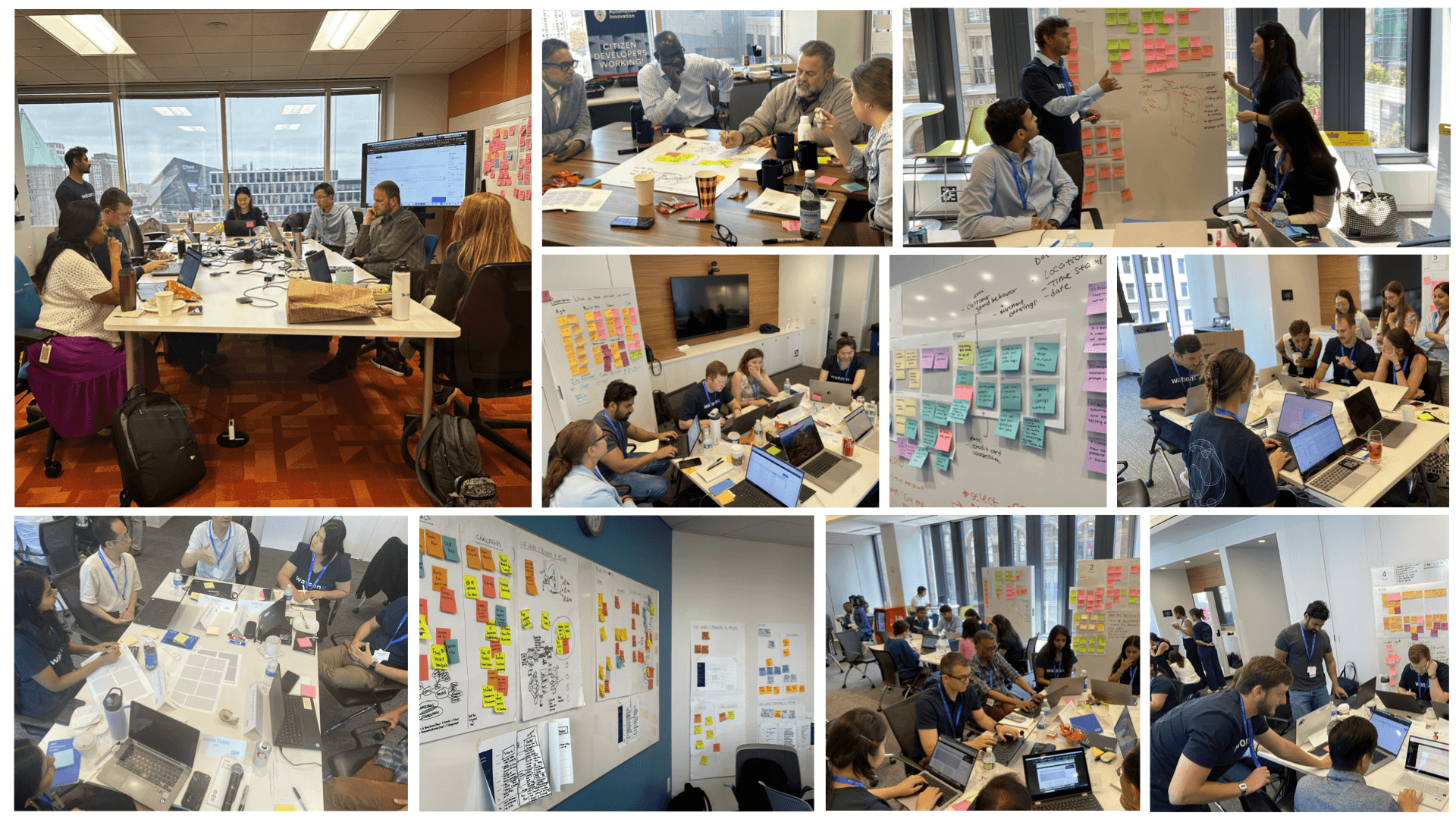
Collaborative Design in Practice
Collaborative Design in Practice
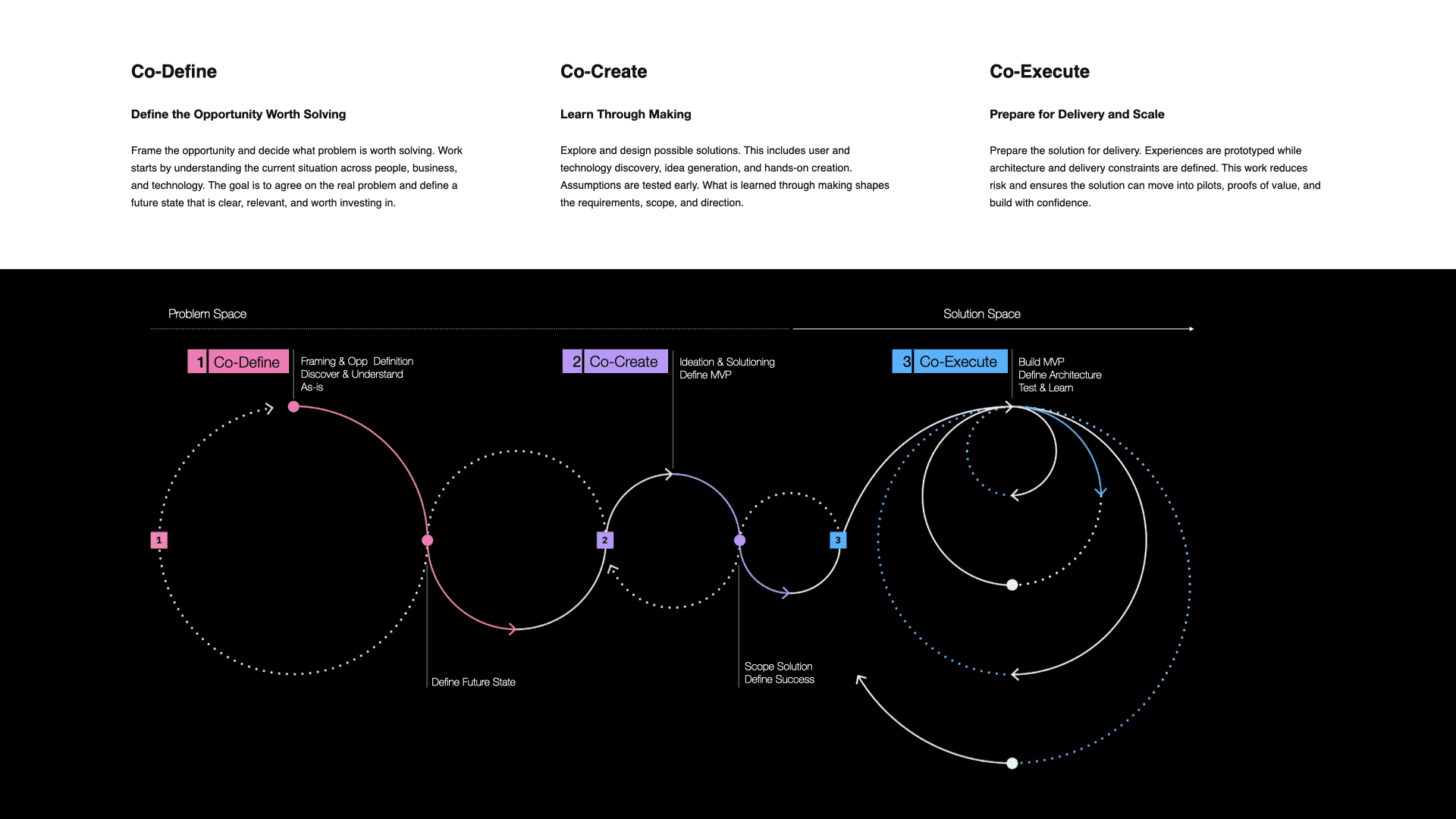
As Head of Americas Innovation Design, I led the intentional build of a unified Innovation Design practice across the U.S., Canada, and South America, spanning 108 designers across 7 markets embedded within 62 Client Engineering squads. The work started by establishing a shared operating model that clarified how design was deployed, measured, and used across markets and squads. Design was positioned upstream in pilot discovery, co-creation, and experience framing, aligned directly to account planning and market priorities rather than treated as downstream execution.
Clear role definition and shared tools established consistency across markets while allowing teams to work at the pace of their local needs. Designers were embedded in 20 signature clients, each representing $50M to $250M in annual client spend, where squads were accountable for delivering roughly 30 pilots per client per year. A monthly measurement cadence and a clear annual utilization target reinforced design as a dependable, revenue-adjacent capability rather than an optional service.
As Head of Americas Innovation Design, I led the intentional build of a unified Innovation Design practice across the U.S., Canada, and South America, spanning 108 designers across 7 markets embedded within 62 Client Engineering squads. The work started by establishing a shared operating model that clarified how design was deployed, measured, and used across markets and squads. Design was positioned upstream in pilot discovery, co-creation, and experience framing, aligned directly to account planning and market priorities rather than treated as downstream execution.
Clear role definition and shared tools established consistency across markets while allowing teams to work at the pace of their local needs. Designers were embedded in 20 signature clients, each representing $50M to $250M in annual client spend, where squads were accountable for delivering roughly 30 pilots per client per year. A monthly measurement cadence and a clear annual utilization target reinforced design as a dependable, revenue-adjacent capability rather than an optional service.
Impact and Outcomes
Over four quarters, design utilization increased from 45% to 75%, exceeding the annual target and recapturing an estimated $4M in annual productivity value. More importantly, design became embedded in how IBM framed opportunities, activated pilots, and translated technology into client value. The Innovation Design practice shifted perception from execution support to an enterprise capability trusted by sales, engineering, and senior leadership to shape growth, align teams, and drive confident decision-making at scale.
Over four quarters, design utilization increased from 45% to 75%, exceeding the annual target and recapturing an estimated $4M in annual productivity value. More importantly, design became embedded in how IBM framed opportunities, activated pilots, and translated technology into client value. The Innovation Design practice shifted perception from execution support to an enterprise capability trusted by sales, engineering, and senior leadership to shape growth, align teams, and drive confident decision-making at scale.
WORKS